7 Foolproof Natural Stone Maintenance Hacks To Enhance Your Floors
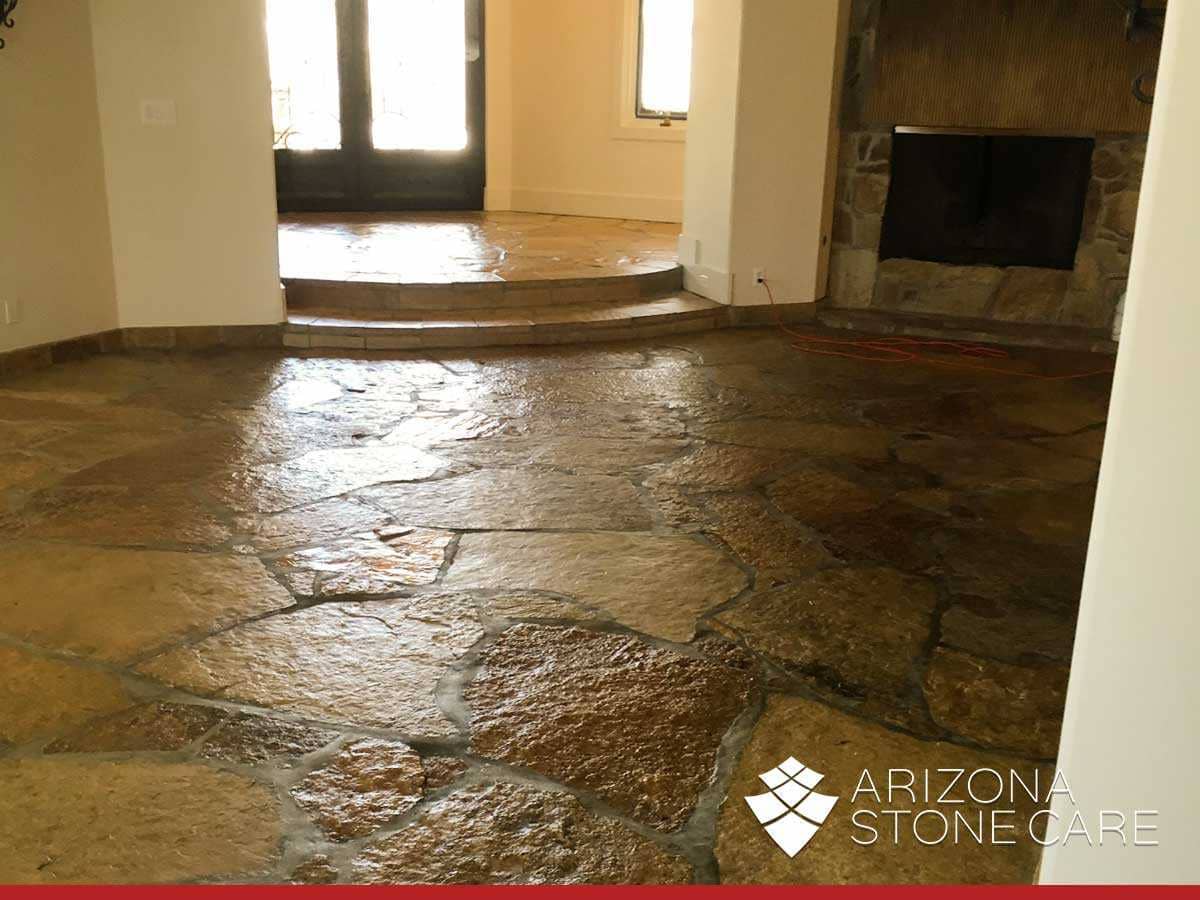
Natural stone floors can look great for years, but Arizona homes put them through a lot: dust, grit at the doors, hard water, and traffic between the house and patio. Those everyday things can take the shine out of a floor over time.
Most stone floors stay in good shape when you keep grit off them, choose a cleaner made for stone, and handle spills quickly.
Quick wins: Dust-mop high-traffic paths, clean with a stone-safe neutral cleaner, and blot spills as soon as they happen. Those three habits prevent many of the problems we see on stone floors.
1. Match the cleaner to your stone
“Natural stone” is a category, not one material. Marble, travertine, and limestone are calcareous stones, meaning they are primarily calcium carbonate and especially sensitive to acidic products. Granite, slate, and quartzite are generally siliceous stones. They are often more acid-resistant, but that does not make harsh cleaners a safe default; trace minerals, grout, finishes, and sealers can still be affected. If you need help sorting out your stone type, the Natural Stone Institute’s care guide is a useful place to start.
If you are unsure what you have, start with installation paperwork or ask a qualified stone-care professional. A cleaner that is appropriate for one floor may not be the right choice for another one. That is especially important with travertine, marble, and limestone.
A quick stone-care cheat sheet
| Common stone | Routine approach | What to avoid |
|---|---|---|
| Marble, travertine, limestone | Use a stone-safe, pH-neutral cleaner and a soft mop. | Vinegar, citrus, and other acidic cleaners. |
| Granite, slate, quartzite | Use a stone-safe cleaner and clean microfiber or soft mop. | Harsh cleaners or abrasives that can affect the stone, grout, finish, or sealer. |
2. Dry-dust to protect and enhance the finish
Sand and dirt are small abrasives. When they sit on a floor and are walked across, they can gradually wear the finish. This matters in Arizona homes where desert dust can make its way indoors quickly.
- Use a clean, untreated microfiber dust mop or soft broom several times a week in busy areas.
- Place sturdy mats inside and outside exterior doors to catch grit before it reaches the stone.
- Shake out or vacuum mats regularly. A dirty mat can become the source of the grit it is meant to stop.
- Check vacuum wheels and attachments before using them on stone so worn plastic or metal parts do not scratch the surface.
For homes with patio doors, pool access, or frequent indoor-outdoor traffic, give entry paths extra attention. Grit that reaches a polished or honed floor can leave dull traffic lanes that routine mopping will not reverse.
3. Stop hard-water film from dulling the surface
Hard water can leave a mineral film as rinse water dries. Phoenix’s 2025 Water Quality Report shows total hardness in the primary system at 10 to 17.6 grains per gallon. Do not let mop water sit and dry on the stone or in the grout lines.
What this means at home: Use clean rinse water and dry the floor before it air-dries whenever practical, especially around kitchens, entries, bathrooms, and patio doors.
Use a clean mop, change rinse water frequently, and remove excess moisture with a soft towel or dry microfiber pad. Do not reach for acidic hard-water removers on marble, travertine, or limestone: a product that dissolves mineral scale can also etch calcium-based stone. For recurring white residue or powdery deposits, see our guide to efflorescence and mineral buildup on stone surfaces.
Seeing cloudy residue, white deposits, or dull areas that do not improve with safe cleaning? Request a stone-floor assessment before trying a stronger product.
4. Use a neutral cleaner and a soft mop
For regular mopping, use a stone-safe, pH-neutral cleaner. For light soil, warm water can be enough. Work with a clean rag mop or microfiber pad, change the rinse water often, then towel-dry excess water when practical.
Too much soap can leave a film that makes a floor look streaky or dull. Avoid soaking the floor; standing water can work into grout lines, seams, and more porous stone.
5. Keep acids and abrasives off the floor
Vinegar, lemon, citrus-based cleaners, toilet-bowl cleaner, and many “all-purpose” products can etch or discolor stone. This is especially important for calcareous stones such as marble, travertine, and limestone. Scouring powders, cream cleansers, stiff scrub pads, and wire brushes can also scratch the finish or damage a protective treatment.
When you need to tackle a sticky spot, start with a soft cloth, warm water, and a stone-safe cleaner. For localized buildup, use a soft-bristle nylon brush gently rather than escalating to a harsh tool.
Never use these on natural stone
- Vinegar, lemon, citrus-based cleaners, or acidic bathroom cleaners.
- Scouring powders, abrasive pads, wire brushes, or stiff scrubbers.
- Any cleaner that is not labeled as safe for the specific stone surface.
6. Blot spills promptly before they become bigger problems
Spills deserve a quick response, especially on more absorbent stone. Blot from the outer edge toward the center with a clean cloth or paper towel. Wiping can spread the spill across a wider area. After blotting, clean with a suitable neutral product, rinse as directed, and dry the surface.
Stain, etch mark, or mineral buildup?
- Darkened area: It may be a stain that has absorbed into the stone.
- Dull or lighter spot: On polished marble, travertine, or limestone, it may be an etch mark, which is damage to the finish caused by acid.
- White powder or residue: It may be mineral buildup or efflorescence rather than a stain.
These problems need different solutions. Avoid random household remedies; see our guide to watermarks and etch marks on stone surfaces for more context. If you are not sure what you are seeing, ask our team for a stone-floor evaluation before using a stronger cleaner.
7. Use sealer strategically, but do not treat it as a cure-all
Many stone floors benefit from the right penetrating or impregnating sealer, especially in high-use or more porous areas. Sealer gives you more time to clean up spills. It will not stop scratches, prevent acid etching, or eliminate regular care.
There is no universal “seal every year” schedule. The right product and reapplication timing depend on the stone, finish, location, traffic, and prior treatment. If water begins to absorb more readily than before, have the floor assessed before applying another product. The wrong treatment can change the appearance or create a maintenance problem.
When cleaning should become restoration
If a floor stays dull after proper cleaning, the issue may be damage to the finish rather than surface dirt. Dull traffic lanes, etching, deep scratches, lippage, stubborn staining, cracked tile, and deteriorated grout may need professional cleaning, honing, polishing, repair, or resealing. Continuing to scrub a damaged finish can make the problem more noticeable.
If you see dull traffic paths, deep scratches, loose tile, or stains that keep returning, it is time to have the floor evaluated. This is especially useful for travertine floors that need maintenance or polishing, marble, limestone, slate, and other surfaces with a finish that needs to be matched carefully.
A practical weekly routine for stone floors
- Most days: Spot-clean spills and dry-dust high-traffic paths.
- Weekly: Damp-clean with a stone-safe neutral cleaner, using clean water and a soft mop.
- Monthly: Clean entry mats, look for new dull spots, darkened areas, changes in grout, and white residue in wet areas.
- As needed: Schedule a professional assessment when the finish changes, stains persist, or water exposure becomes a concern.
Natural stone floor care FAQs
Can I use vinegar on natural stone?
No. Vinegar and other acidic cleaners can etch calcium-based stone such as marble, travertine, and limestone. Use a stone-safe, pH-neutral cleaner instead.
How often should I seal a natural stone floor?
There is no one-size-fits-all schedule. The right timing depends on the stone, finish, location, traffic, and prior treatment. If water absorbs more readily than before, have the floor assessed before applying another product.
What is the safest mop for natural stone?
A clean microfiber mop or soft rag mop is a good routine choice. Use minimal water, change the rinse water frequently, and avoid abrasive pads.
Need help enhancing a stone floor that has lost its finish?
Arizona Stone Care provides professional natural stone cleaning, polishing, sealing, repair, and restoration throughout the Phoenix metro. If your floor is dull, stained, etched, or uneven, request a stone-floor evaluation. We will look at the stone and recommend the right next step.

Arizona Stone Care
Email: [email protected]
Website: www.arizonastonecare.com
Mesa Location
505 W 8th Ave #17
Mesa, AZ 85210
Office: 480-232-6264
Scottsdale Location
6908 E Thomas, Suite #202-1,
Scottsdale, AZ 85251
Office: 602-932-0011
Chandler Location
2101 N Evergreen, unit 1031
Chandler, AZ 85225
Office: 480-531-6796